





What are the top safety features to look for in off-grid solar inverters?
- 1. How does overload protection in off-grid solar inverters prevent damage to connected appliances?
- 2. What role does short circuit protection play in enhancing the safety of off-grid solar inverters?
- 3. How does thermal shutdown in off-grid solar inverters protect against overheating?
- 4. Why is reverse polarity protection essential in off-grid solar inverters?
- 5. How does overvoltage protection in off-grid solar inverters prevent damage to connected equipment?
- 6. How does ground fault detection enhance the safety of off-grid solar inverters?
1. How does overload protection in off-grid solar inverters prevent damage to connected appliances?
Overload protection is a vital safety feature in off-grid solar inverters that safeguards both the inverter and connected appliances from excessive current. When the power load exceeds the inverter's rated capacity, this mechanism automatically shuts down the system, preventing potential damage to internal components and reducing the risk of electrical fires. This feature is particularly important in off-grid systems where the inverter operates independently, ensuring that any sudden surge in demand doesn't compromise the system's integrity.
2. What role does short circuit protection play in enhancing the safety of off-grid solar inverters?
Short circuit protection is designed to detect and isolate faults caused by short circuits within the system. In the event of a short circuit, this feature immediately disables the output, preventing the internal circuitry from melting and reducing the risk of electrical fires. This rapid response is crucial in off-grid systems, where the inverter is the primary source of power, and any malfunction can lead to significant safety hazards.
3. How does thermal shutdown in off-grid solar inverters protect against overheating?
Thermal shutdown is a protective feature that monitors the inverter's internal temperature. If the temperature exceeds a predefined threshold, the system automatically reduces power output or shuts down to prevent thermal damage to internal components. This is particularly important in off-grid systems, where inverters often operate in remote locations without adequate ventilation. By preventing overheating, thermal shutdown ensures the longevity and reliability of the inverter.
4. Why is reverse polarity protection essential in off-grid solar inverters?
Reverse polarity protection safeguards the inverter and connected devices from potential damage caused by incorrect wiring. If the positive and negative terminals are connected in reverse, this feature detects the anomaly and prevents the inverter from operating, thereby protecting internal components from damage. This is especially important in off-grid systems, where users may not have access to professional installation services, reducing the risk of user-induced errors.
5. How does overvoltage protection in off-grid solar inverters prevent damage to connected equipment?
Overvoltage protection is designed to detect and respond to voltage levels that exceed the safe operating range of the inverter and connected equipment. In the event of an overvoltage condition, the system takes appropriate action, such as disconnecting the power source or reducing output, to prevent damage to internal components and connected devices. This feature is crucial in off-grid systems, where voltage fluctuations can occur due to varying solar irradiance and battery charge levels.
6. How does ground fault detection enhance the safety of off-grid solar inverters?
Ground fault detection identifies unintended paths for electricity to ground, which can lead to electric shock or fires. The inverter monitors for any imbalance between current flowing to and from the solar array and automatically shuts down or alerts users when a ground fault occurs. This feature is essential in off-grid systems, where the absence of a direct connection to the utility grid means that any electrical fault can pose significant safety risks.
Incorporating these safety features into your off-grid solar inverter is crucial for ensuring the reliability and safety of your energy system. By understanding and selecting inverters with these protections, you can achieve a secure and efficient off-grid power solution.


OEM & ODM Services
What’s the main difference between your OEM and ODM services?
OEM uses your brand on our standard products; ODM creates entirely new products based on your concept or specification.
Pure Sine Wave Inverters
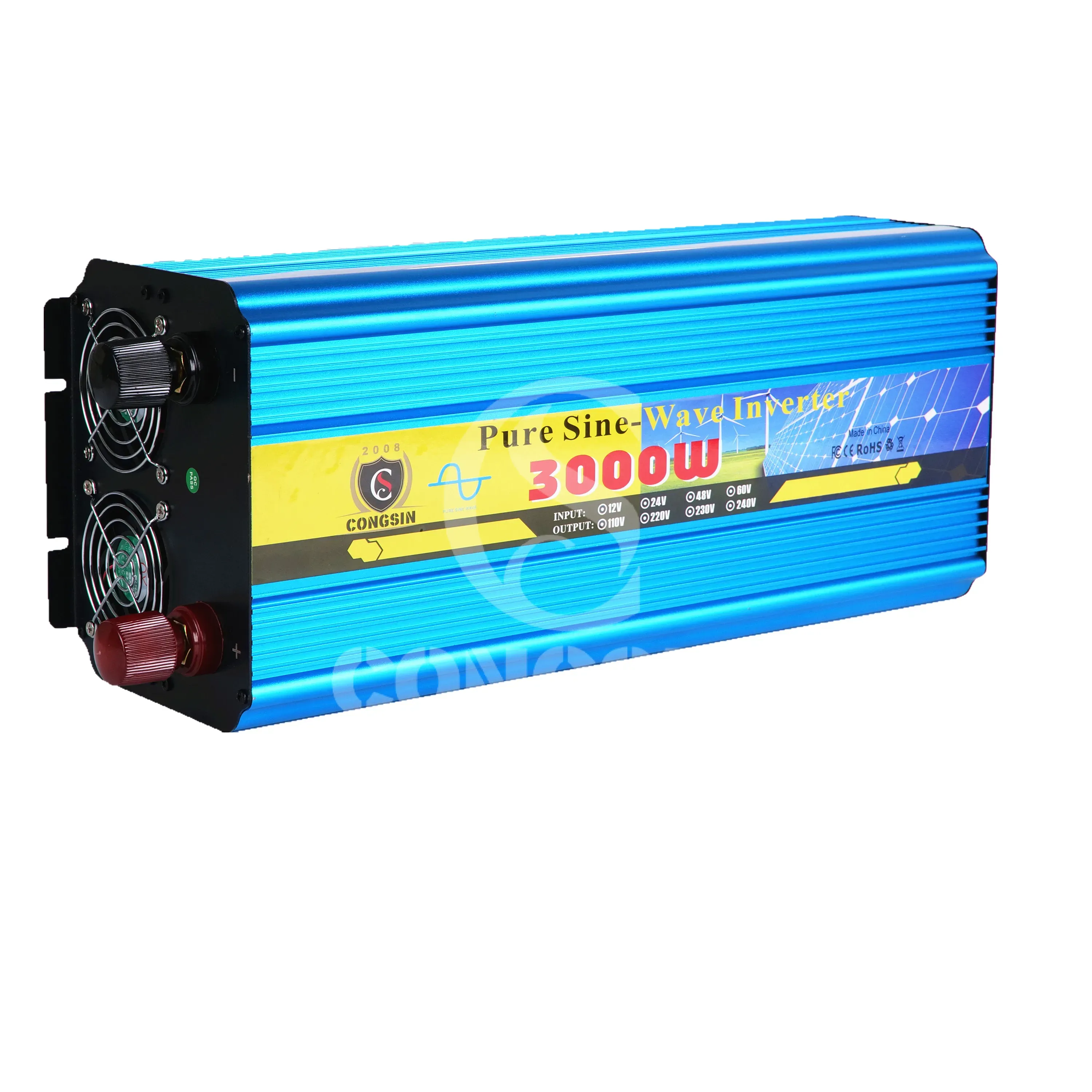
What is the difference between labeled 6000W and full power 3000W?
Labeled 6000W is peak power, which is only used to cope with the instantaneous high-power demand during device startup (such as air conditioner, motor startup); full power 3000W is continuous power, referring to the power that the device can stably output for a long time. When driving appliances daily, 3000W should be used as a reference to avoid total power overload.
Does it include protection features?
Yes, it has sixfold safety protection for reliable performance.
Modified Sine Wave Inverters
Can this 2000W inverter power an air conditioner?
If the air conditioner power is within 2000W and the input is AC220V, it can supply power normally. It is recommended to ensure stable power when starting.
What devices can be powered by this inverter?
Suitable for TVs, fans, computers, and small tools.
Get in Touch with Our Team
You can also communicate with us directly through our online contact form. Please fill in the following information, and our team will contact you as soon as possible after receiving your message.

CONGSIN is a trusted OEM factory for power inverters, solar charge controllers, and DC converters. Reliable solutions for global B2B buyers.
 High Quality
 7/24 Service
 Guaranteed Warranty
© 2025 Congsin. All Rights Reserved.